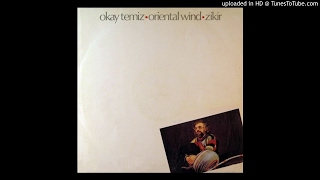
In 1979, Turkish percussionist and composer Okay Temiz recorded Zikir, a landmark fusion album that fundamentally altered how jazz could think about harmony and rhythm. Recorded at Stüdyo Hayri in Istanbul with his ensemble Oriental Wind—featuring ney player Aka Gündüz, soprano saxophonist Dou Dou Gouirand, pianist and saxophonist Tuna Ötenel, and bassist Onno Tunç—the album presents not jazz "going world," but rather two distinct musical epistemologies engaging in genuine dialogue.
The Turkish classical music system of makam offers what Western jazz had never systematically explored: an alternative harmonic vocabulary built on microtonal intervals. Where bebop and post-bop jazz operated within the equal-tempered 12-tone system, makam employs quarter-tones and microtonal inflections that create pitch relationships impossible in conventional Western harmony. On Zikir, tracks like "Suzinak Semai (Aksak Semai)" demonstrate this integration viscerally. The ney's microtonal undulations establish a tonal palette that Gouirand's soprano saxophone interprets through recognizably jazz phrasing, yet the harmonic tension derives not from functional chord changes but from makam-specific intervals—creating dissonance and resolution according to principles jazz had never encountered.
Tuna Ötenel's piano work embodies this tension most acutely. A pianist navigating equal temperament must choose: either abandon the instrument's tuning system or create deliberate dissonance against the makam framework. Ötenel chose the latter, making that friction itself an expressive device. This move legitimized microtonal color as jazz vocabulary rather than treating it as exotic seasoning.
Equally revolutionary is Zikir's engagement with Ottoman classical music's usul system—complex, asymmetrical metric cycles fundamentally alien to American jazz's rhythmic foundations. The aksak semai referenced in track titles operates on a 10-beat cycle (organized as 5+5, or in other configurations as 2+3+5), creating metric patterns that jazz drummers had no established language for. This represents a departure as significant as moving from functional harmony to free harmony.
Temiz's drumming applies usul patterns as organizational frameworks equivalent to jazz timekeeping, yet with polyrhythmic complexity that creates cross-rhythmic tension. A jazz improviser expects square four-bar phrases; the aksak meter's irregular subdivision disrupts that expectation, forcing soloists to either resist the meter or internalize fundamentally different phrasing logic. Onno Tunç's bass work—adapting the American walking bass tradition to non-4/4 contexts—demonstrates that jazz's rhythmic language could flex without breaking.
The synthesis Zikir achieved had cascading consequences. By establishing that jazz improvisation could meaningfully engage non-Western pitch systems and metric frameworks, Temiz challenged the implicit premise underlying jazz: that the music required Western tuning and square meters. This legitimized world-jazz fusion not as exoticism or commercial appropriation, but as structural music theory in practice.
The album's harmonic expansion—incorporating makam's microtonal palette—influenced subsequent spiritual jazz and world-jazz practitioners who recognized that jazz's expressive vocabulary could be radically enlarged without abandoning improvisation. The rhythmic template Temiz established—polymetric sophistication derived from Ottoman classical sources—anticipated the work of later fusion artists and contemporary Afrobeat-jazz fusions.
Released on Sun Records, Zikir strengthened Temiz's international profile and positioned Turkish musicians within global jazz discourse as sophisticated contributors rather than local performers of national styles. The album's enduring legacy lies in its demonstration that American jazz idioms could authentically absorb non-Western harmonic and rhythmic systems—that genuine dialogue between musical traditions could deepen both.